

Main Article: Celebrating 100 Years of Storytelling
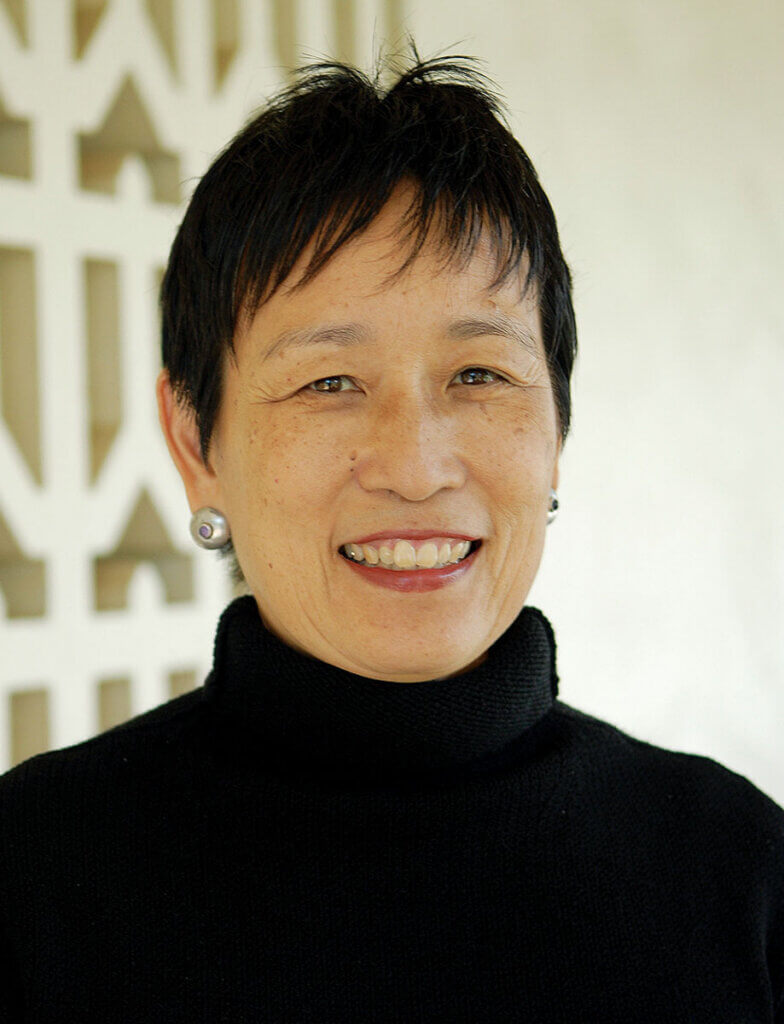
Carlyn Tani ’69’s prolific career at Punahou spanned from 2005 to 2014, a period during which she made lasting contributions in a range of strategic storytelling roles, including Punahou Bulletin editor, communications officer and director of external relations.
It was a consequential time in the School’s history, marked by milestones that demanded thoughtful, nuanced coverage. Tani consistently rose to the occasion. Among the highlights were the Buff ’n Blue’s consecutive top athletic rankings by Sports Illustrated, which vaulted Punahou onto the international sports stage. Around the same time, the School found itself in an even brighter spotlight with the political ascent of alumnus Barack Obama ’79. The period was also defined by major advances in sustainability, including the installation of seven photovoltaic systems and Punahou’s achievement of LEED Platinum certification.
Tani continues to help chronicle Punahou’s story. In 2023, she authored a comprehensive feature on the School’s Davis Democracy Initiative. For the Summer 2025 issue, she wrote “Blueprints for Learning,” a piece that explores how architects of the past continue to shape the ways students learn, dream and discover on campus today.
To say Tani’s storytelling has stood the test of time would be an understatement. For this special issue, she was invited to curate a trio of stories that still resonate with her. Reflecting on her years at the Bulletin, she selected the following.
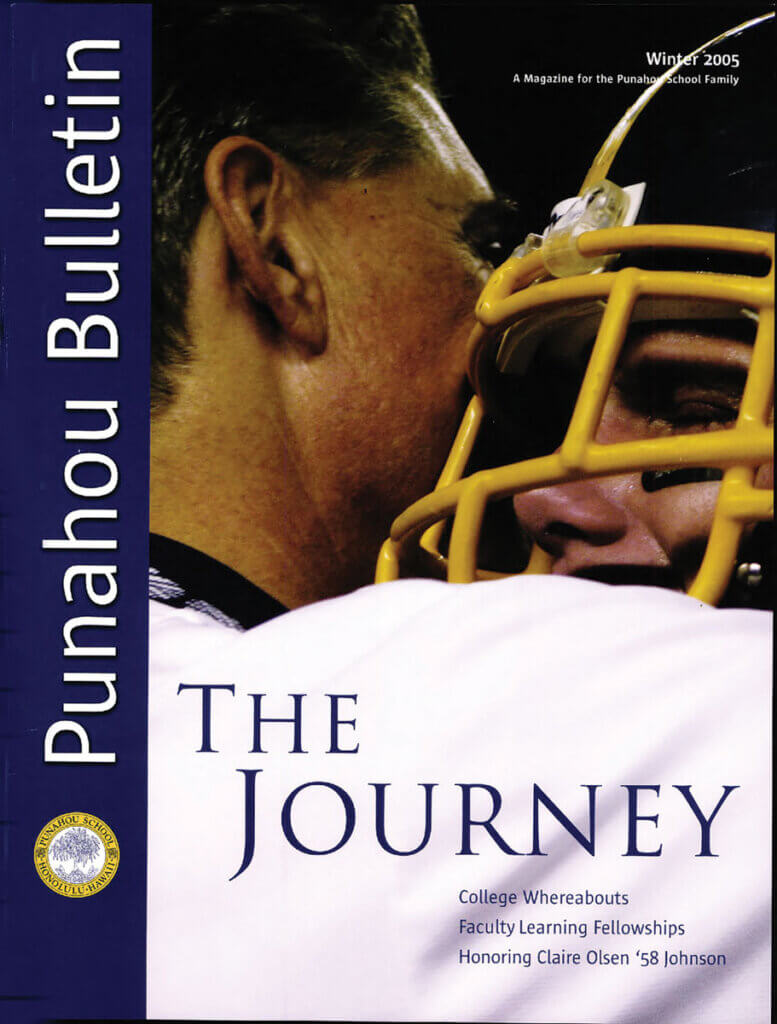
“The Journey,”
Fall 2005
Tani’s first feature as editor chronicled the football team’s run to the 2008 state championship game, a matchup between Punahou and Kahuku High School. As a ’69 alumna, the assignment offered a meaningful way to reconnect with cherished traditions, from Junior School pep rallies to rousing cheers.
“Writing the piece made me realize that football serves as a vital training ground for boys to grow into disciplined young men,” she said.
The season became a powerful rallying point for the entire School community. A special highlight for Tani was watching the championship game from the sidelines, where she witnessed firsthand the effort, intensity and raw emotion of the moment. While the team did not take home the title that year, each player gained something more enduring: lifelong friendships and a hard-earned understanding of how to lose with grace and pride.
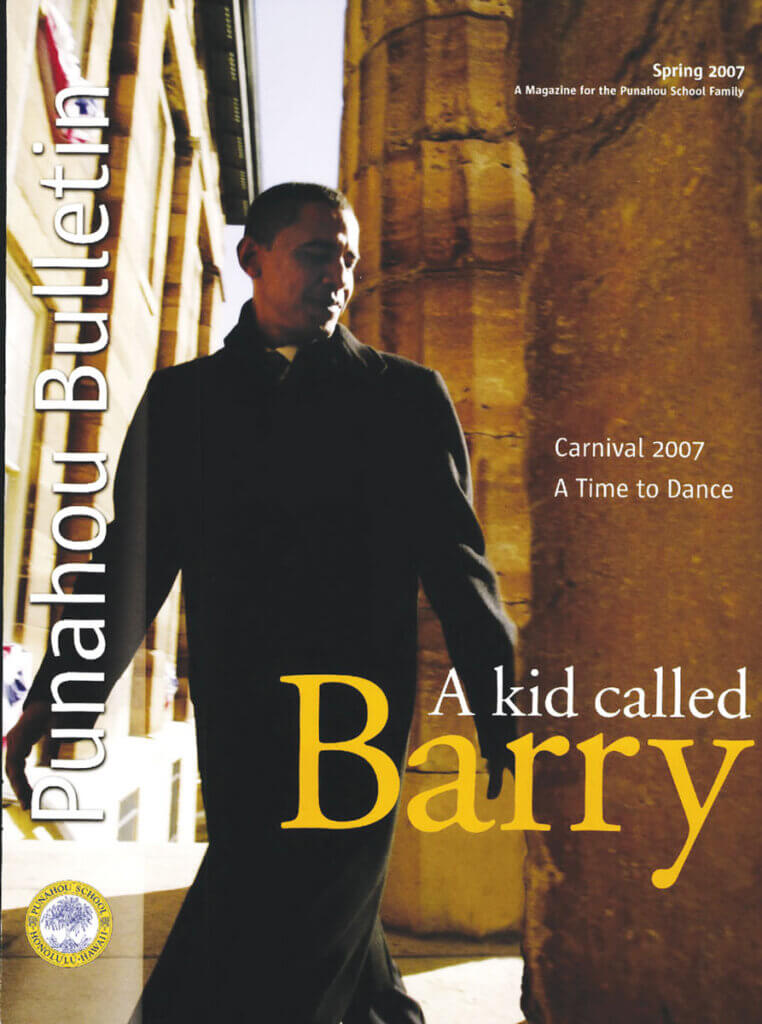
“A Kid Called Barry,”
Spring 2007
When Barack Obama announced his candidacy for U.S. president in 2007, Punahou was suddenly thrust into the global spotlight.
“Reporters clamored for interviews and campus tours, eager to know how a laid-back kid from Hawai‘i had become this galvanizing national figure,” Tani notes.
As she researched Obama’s years at Punahou, two themes stood out: the influence of his teachers, particularly Mabel Hefty, and his passion for basketball.
When Obama entered Punahou in fifth grade, Hefty had just returned from a teaching sabbatical in Kenya, his father’s homeland. A veteran, no-nonsense educator, she took a keen interest in “Barry,” encouraging him to see his overseas experiences in Indonesia as meaningful and formative. In 2007, Obama named Hefty his favorite teacher, saying she made “every single child feel special.”
Tani also recalled a lighter moment from campus life. Months before declaring his candidacy, Obama stopped by the Athletic Complex one afternoon to play basketball with former teammates. This was before Secret Service protection, allowing Tani to watch from courtside.
At the start, Obama gathered the players and joked with a wide grin, “You know, we’re all a bit older now, so in case anything happens, we have a medical team standing by right here.” The group laughed, then played hard, driving past defenders and sprinting down the court to take their shots.
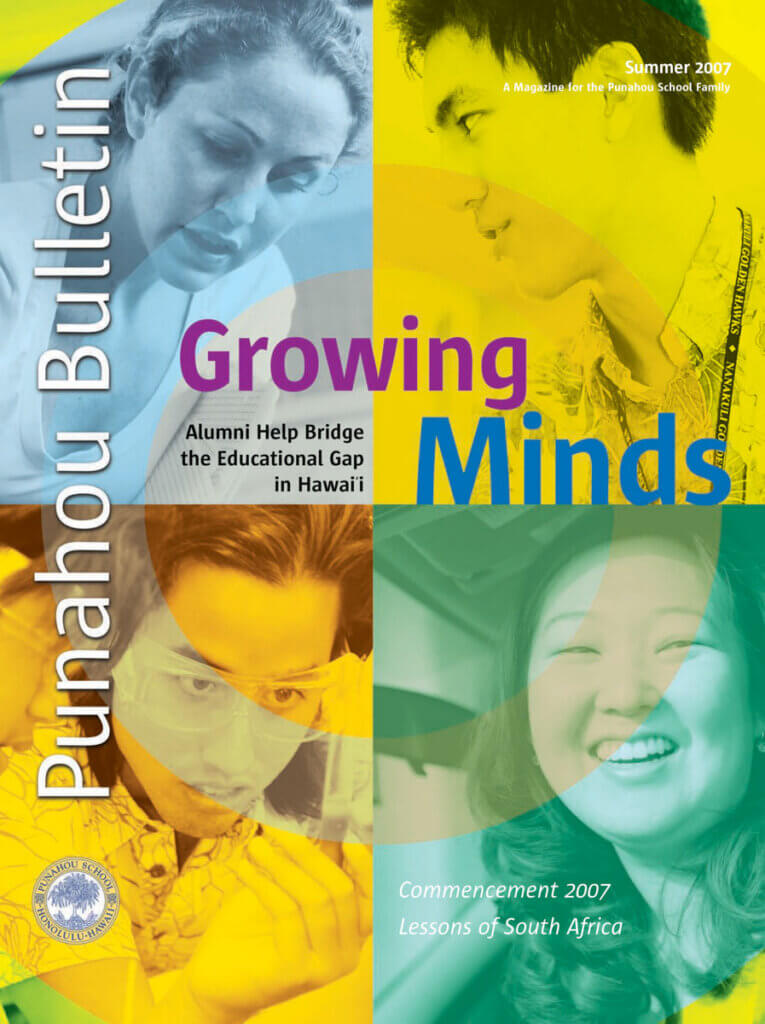
“Growing Minds,”
Summer 2007
“My favorite part of being editor was working with writers and bringing fresh voices into the magazine,” Tani said.
She especially enjoyed editing “Growing Minds,” a feature that highlighted young alumni, teachers and administrators working to close educational gaps in Hawai‘i and South Africa. One section focused on Punahou teachers who had traveled to South Africa to conduct teacher training workshops. Another shared perspectives from young alumni participating in Teach For America Hawai‘i, a program that places recent college graduates in underserved classrooms for two-year teaching commitments.
In his essay, John Chock ’01 reflected on teaching seventh-grade science at ‘Aiea Intermediate School through TFA Hawai‘i. His vivid portraits of students, including one “plate-lunch bon vivant” who could steer any conversation toward food, brought to life the young people who challenged and inspired him daily.
“Education,” Nelson Mandela once said, “is the most powerful weapon which you can use to change the world.” Through the voices of Punahou teachers and alumni, “Growing Minds” offered a compelling look at that ideal in action.