
By Suzanne Sato ’67
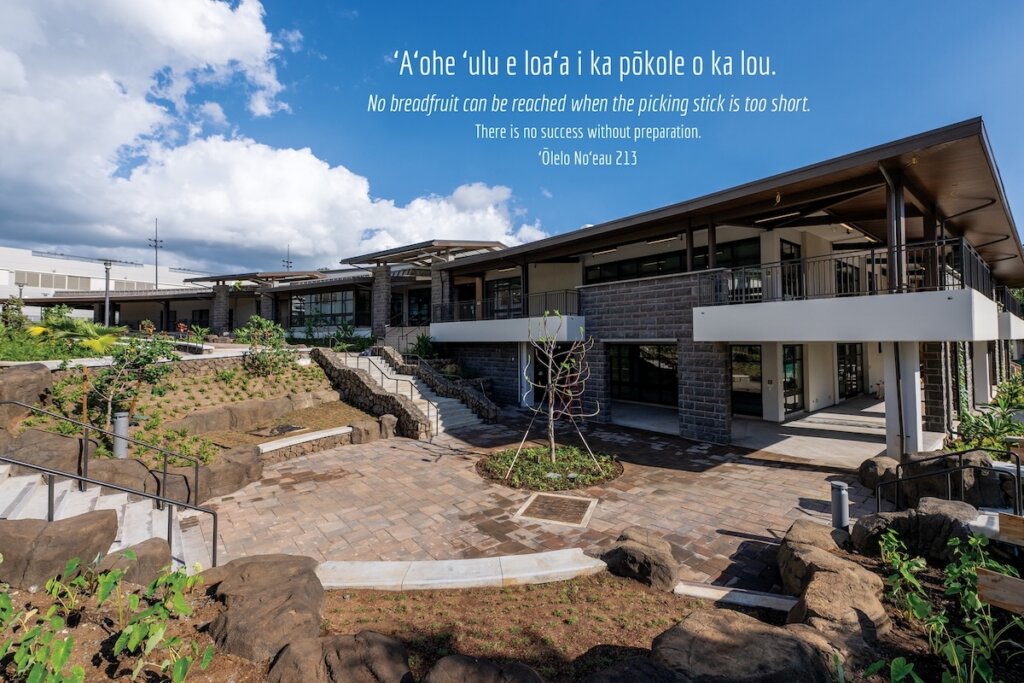
For almost 200 years, Punahou School has been notable for its sense of place and for the intentional way that the natural environment has been integral to the teaching and learning experience. The Mary Kawena Pukui Learning Commons, scheduled to open for full operation in fall 2026, promises to be a jewel in the crown, both for its spacious and innovative interior and for the detailed attention to its welcoming exterior pathways, rain gardens and seating areas.
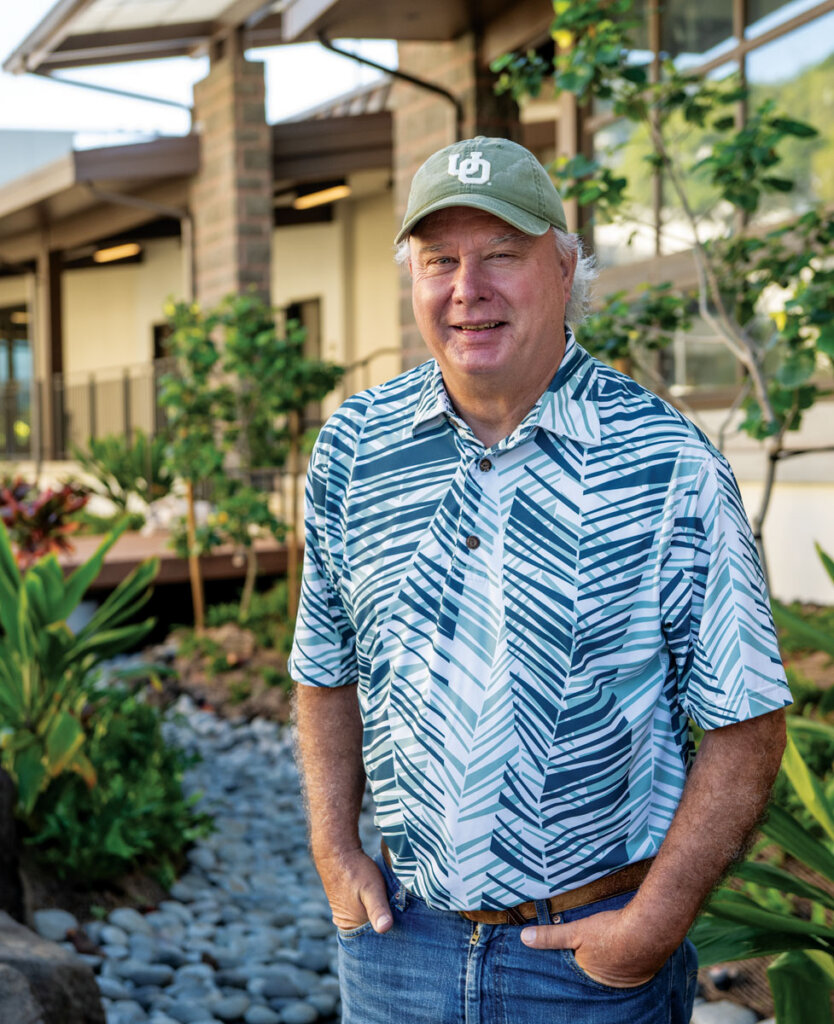
PBR Hawai‘i & Associates has been a faithful partner along Punahou’s verdant journey, supporting the School’s major landscape architecture projects for more than 25 years. Much of this work has been led by PBR chairman emeritus Stan Duncan ’73, who also served as president of the company for the past ten years until 2025. Duncan is intimately familiar with Punahou’s values, history and culture. He shared some of the planning behind the landscape design of the new Learning Commons.
Early planning for the Learning Commons began 13 years ago, and Duncan noted that Punahou had been talking about the idea of edible landscapes as a way to promote healthy eating habits in students. Incorporating culturally important edible species into the campus landscape reinforces the culinary curriculum that has been introduced and developed in recent years. In all, 36 plant species, 75% native to Hawai‘i, are integrated into the landscape design, and the naming of the Mary Kawena Pukui Learning Commons further underscores the importance of the natural environment in Hawaiian life and culture and honors the legacy of knowledge that she left us.
Wai (fresh water) and lā (sun) have been central themes in positioning landscaping features. For example, “the rain garden on the Punchbowl side of the project is a dry stream bed that runs in the “uka-kai” direction, weaves down in front of the Learning Center and is strategically positioned to accept and control stormwater runoff and promote groundwater recharge. Rain gardens reduce erosion, lessen opportunities for flooding and prevent pollutants from reaching streams that drain into the ocean.” The paved outdoor courtyards between Alexander Hall and the Learning Commons are designed to capitalize on porous permeable pavers which help reduce heat effects and encourage infiltration of rain underground, eventually recharging our island’s aquifer, rather than allowing it to flow into a storm drain line.
Along with sustainability, use of native plants has been a central design concept, which began decades ago with the encouragement of Pal Eldredge ’64. “So today, if you add it all up, almost 75 – 80% of new plantings around the campus are native species.”
Duncan observed that Mary Kawena Pukui loved plants and “wrote many mo‘olelo about plants in Hawaiian culture, how they were used medicinally, as building materials, and for lei-making. We have tried to incorporate many of them in the landscape design surrounding the Learning Commons, such as ‘ōhi‘a, loulu, kou, alahe‘e, koki‘o, ki, laua‘e, kupukupu, palapalai … We’ve also included flowering trees for lei-making with plumeria and pua kenikeni, though they are technically hybrids, and not native species. Historically, yellow plumeria trees were part of the original Cooke Library landscape design and we felt it important to include them once again around the new Learning Commons.”
Duncan has also worked closely with Culinary Resource Teacher Mark Noguchi ’93 who will be developing curriculum for the Food Design Lab in the Learning Commons. An ‘ulu tree is centrally located in the café courtyard, along with other edible plants, kalo, ‘uala and hō‘i‘o fern. Ideally students will be able to see these plants up close and harvest them right outside the test kitchen.
Duncan also pointed out a new boardwalk that meets American with Disabilities Act standards, which was added to connect students from the swimming pool past Alexander Hall, with informal seating areas for small groups of students to gather. He noted that weather resistant and synthetic decking and site furniture materials were strategically selected to combat termites and simplify maintenance.
Pausing at the new stone bleachers at the Middle Field main entrance, Duncan reminisced about early mornings and late afternoons when he sat with his Class of ’73 classmates on the concrete benches in front of Cooke Library to talk story. “Little did I know that I would be in this capacity now … it’s special to be able to give back to the School that has done so much for me and my family for so many years.”

Mary Kawena Pukui Learning Commons project at learningcommons.punahou.edu