


By Ha Lee, P’32
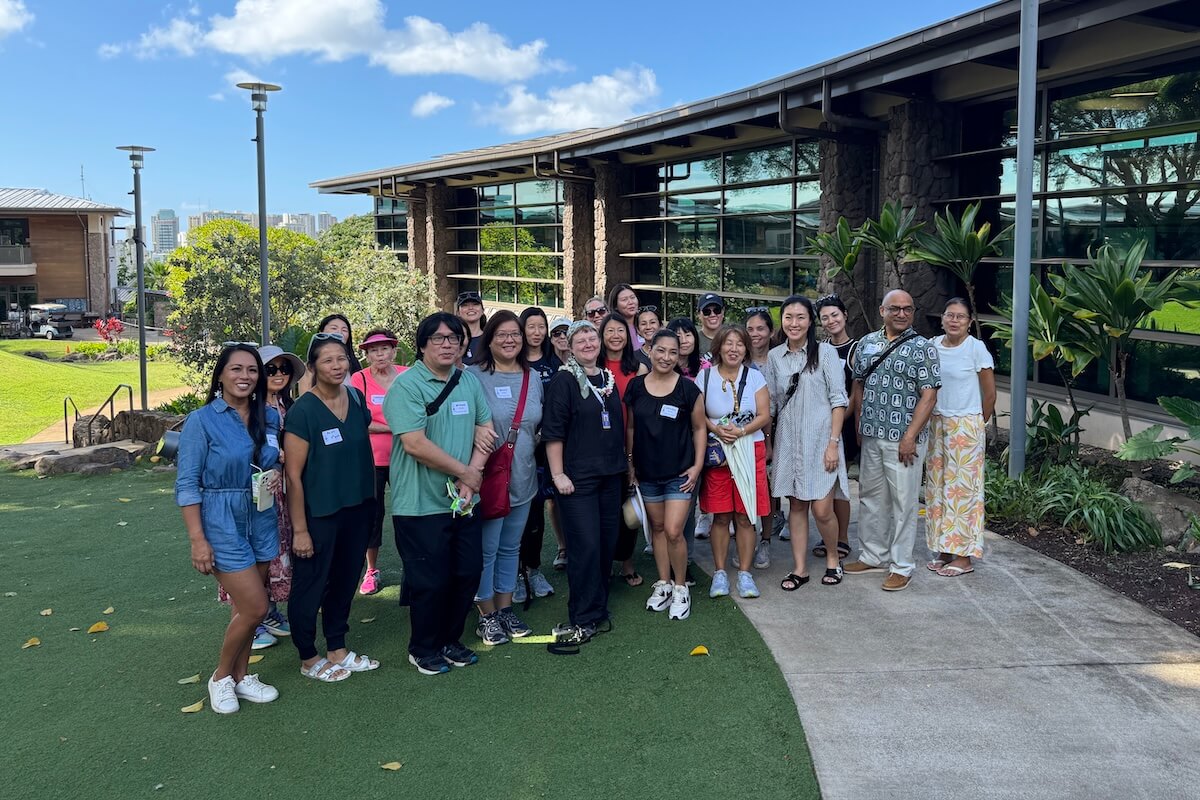
In preparation for Punahou’s bicentennial in 2041, Kylee Mar, Director of Archives & Special Collections, and Kate Larsen, Assistant Archivist, led a group of 30 Punahou community members on an insightful tour exploring parts of campus designed or inspired by renowned architect Vladimir Ossipoff.
The tour began in a circle where participants – alumni, grandparents, new and long-time Punahou families, and faculty – shared personal memories of their connections to Punahou. From recalling the joy of receiving a child’s acceptance letter to reminiscing about their own school days, each story reflected the deep sense of belonging within the Punahou ‘ohana. This thoughtful opening set the tone for the morning, reminding everyone that these meaningful spaces on campus are more than just buildings – they hold the collective memories of generations.
Ossipoff’s life mirrored the rich, multicultural fabric of Punahou’s community. Born in Russia, raised in Japan, educated and trained in California, and ultimately settling in Hawai‘i, Ossipoff became a master of Hawaiian Modernism. His work – celebrated for its clean mid-century lines that harmonize with the islands’ natural environment – can be seen across Honolulu in landmarks such as the Hawai‘i Museum of Modern Art, The First Church of Christ, Scientist, and most famously, the Liljestrand House.
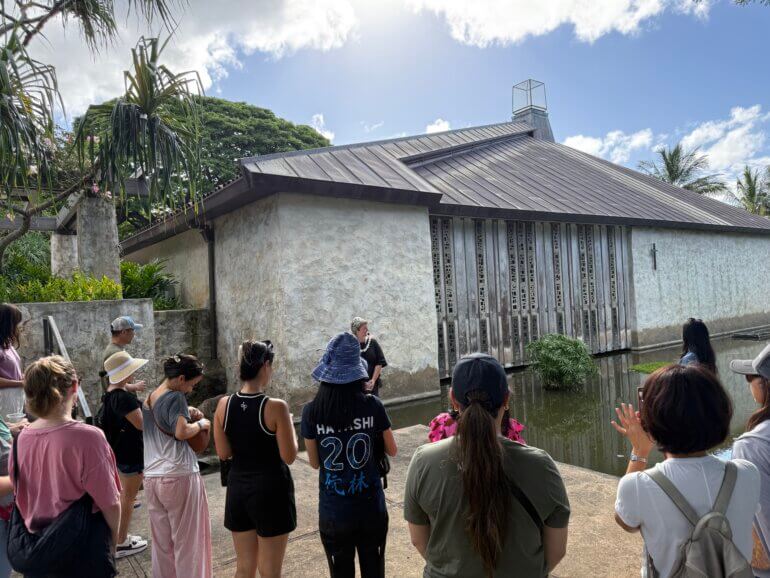
The tour began at the heart of campus, Thurston Memorial Chapel, a quintessential example of Ossipoff’s design philosophy and his emphasis on connecting indoor and outdoor living. Originally designed to rely on natural cross-drafts and tradewinds rather than air conditioning, the chapel reflects a deep respect for Hawai‘i’s climate and landscape. (Though, as today’s students and teachers might agree, the later addition of A/C was a welcome one!)
Inside the Chapel, participants were greeted by the sound of the organist rehearsing, filling the space with warmth and reverence. The chapel’s gently descending walkway invites quiet reflection, leading visitors toward the pews as the soaring ceiling lines draw the eye – and spirit – upward, symbolizing the connection between the earthly and the divine.
Ossipoff’s integration of nature is also evident in the Chapel’s relationship to water. It sits directly above the natural spring Ka Punahou, while the adjacent lily pond extends into the chapel itself. From inside, visitors can glimpse koi gliding beneath the surface – a serene reminder of the harmony between architecture and the natural world.
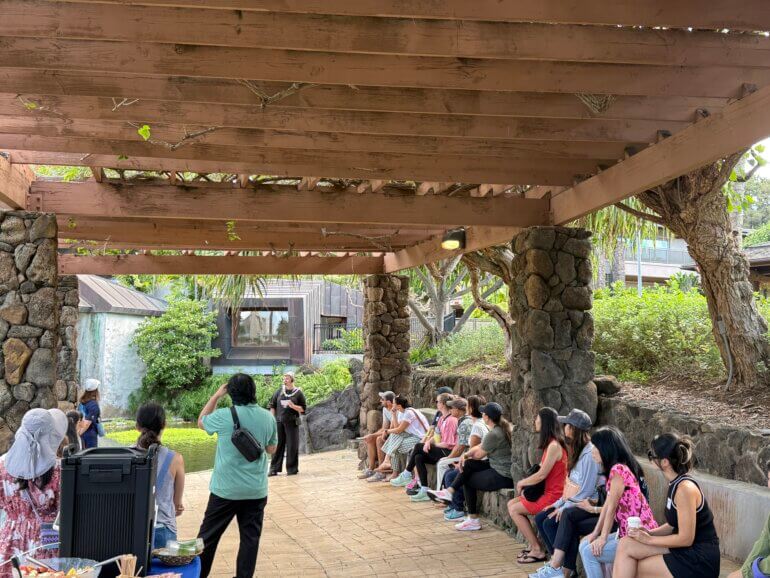
Exiting the chapel, the group entered the Hawaiian cloister courtyard, another of Ossipoff’s designs, created in collaboration with Hawai‘i’s first landscape architect, Catherine Thompson. The large monkeypod tree provides shade and tranquility, forming a peaceful transition between the chapel’s calm and the lively energy of campus life beyond.
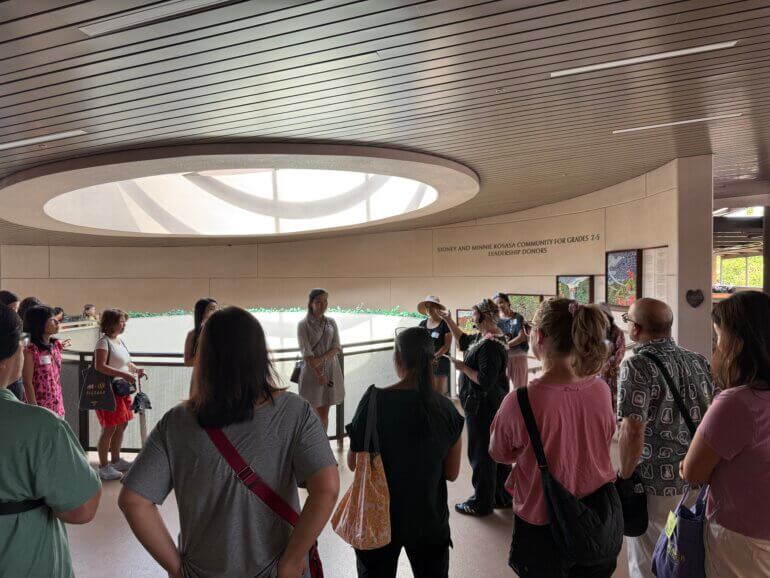
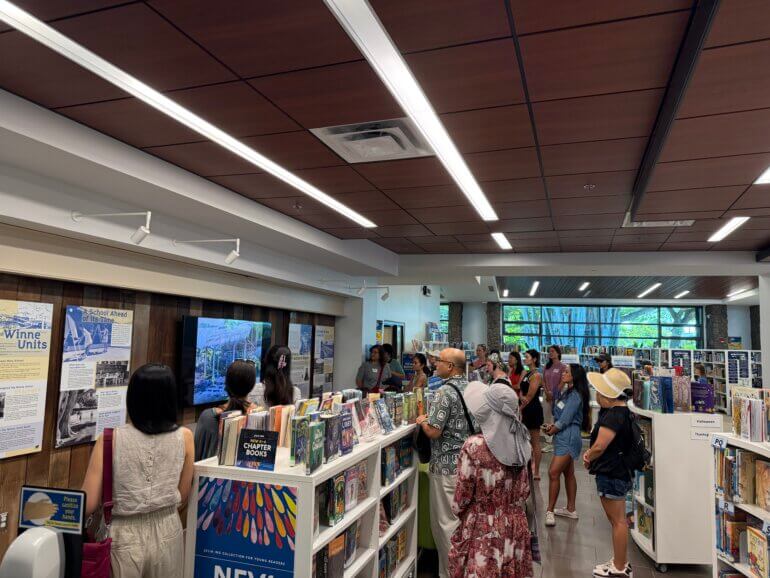
The tour continued to the site of the former Winne Units, now home to the Kosasa Community for Grades 2 – 5. Here, the group learned how elements of Ossipoff’s original design – such as the distinctive oculus – were thoughtfully incorporated into the new buildings. Inside the Kosasa Library, a preserved section of lava rock and redwood wall pays tribute to Punahou’s architectural heritage. These materials were chosen not only for their beauty but also for their durability: lava rock for its strength and resilience, and redwood for its natural resistance to termites.
As the visit to Kosasa concluded, everyone enjoyed a nostalgic surprise: “Juice Time.” Juice boxes were served from the original wooden crates, just as they had been in the days of the Winne Units. Several guests even had the chance to ring the historic Winnie Bell, originally brought from Mexico to Punahou in the 1950s by then-President John Fox. To wrap up the nostalgic nature of the tour, a stop at the beloved Banyan Tree gave participants a moment to pause and reflect upon the morning as they watched the next generation of students on the playground.
The tour concluded where it began – back at Thurston Chapel. Walking together through campus, participants were reminded that Punahou’s beauty lies not only in its lush setting but also in its intentional design – spaces that nurture both body and mind. And just as each building tells a story, so too do the memories shared within them. These moments, past and present, continue to shape the Punahou experience – connecting generations through shared history, place, and purpose.