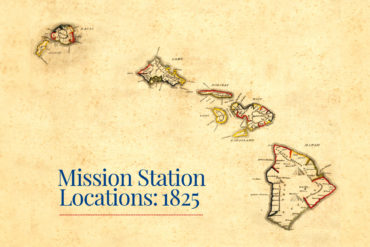
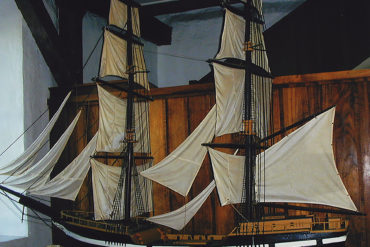
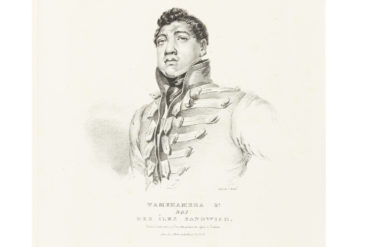
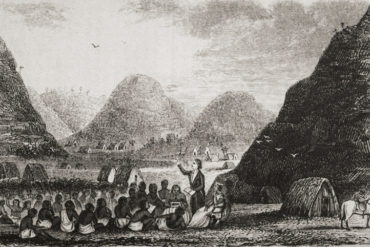
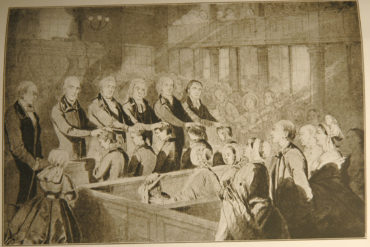
On October 23, 1819, the fourteen men and women of the first company to Hawai‘i boarded the brig Thaddeus, anchored in Boston Harbor. They were joined by four Hawaiian men, three as members of the mission and a prince returning home to Kaua‘i.
The American Board of Commissioners for Foreign Mission (ABCFM), founded in 1810, arose from the religious fervor that America experienced during the Second Great Awakening.
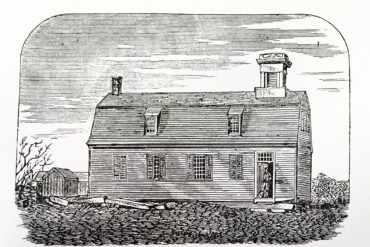
Faced with declining revenues for its global missions, ABCFM founded the Foreign Mission School in Cornwall, Connecticut, in 1816 as a way to proselytize at home and to boost donations.This boarding school aimed to educate non-Christian boys to become missionaries in their homelands.
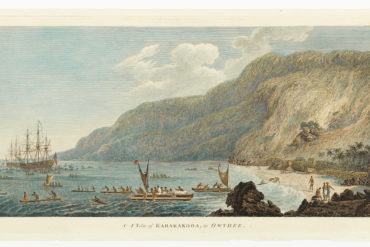
Captain James Cook was a British naval officer and explorer who commanded three voyages to the Pacific. Privately, he carried orders from the Admiralty to claim any “undiscovered” Pacific islands for Britain, with an eye to assessing the islands’ natural resources.
Zeen is a next generation WordPress theme. It’s powerful, beautifully designed and comes with everything you need to engage your visitors and increase conversions.