

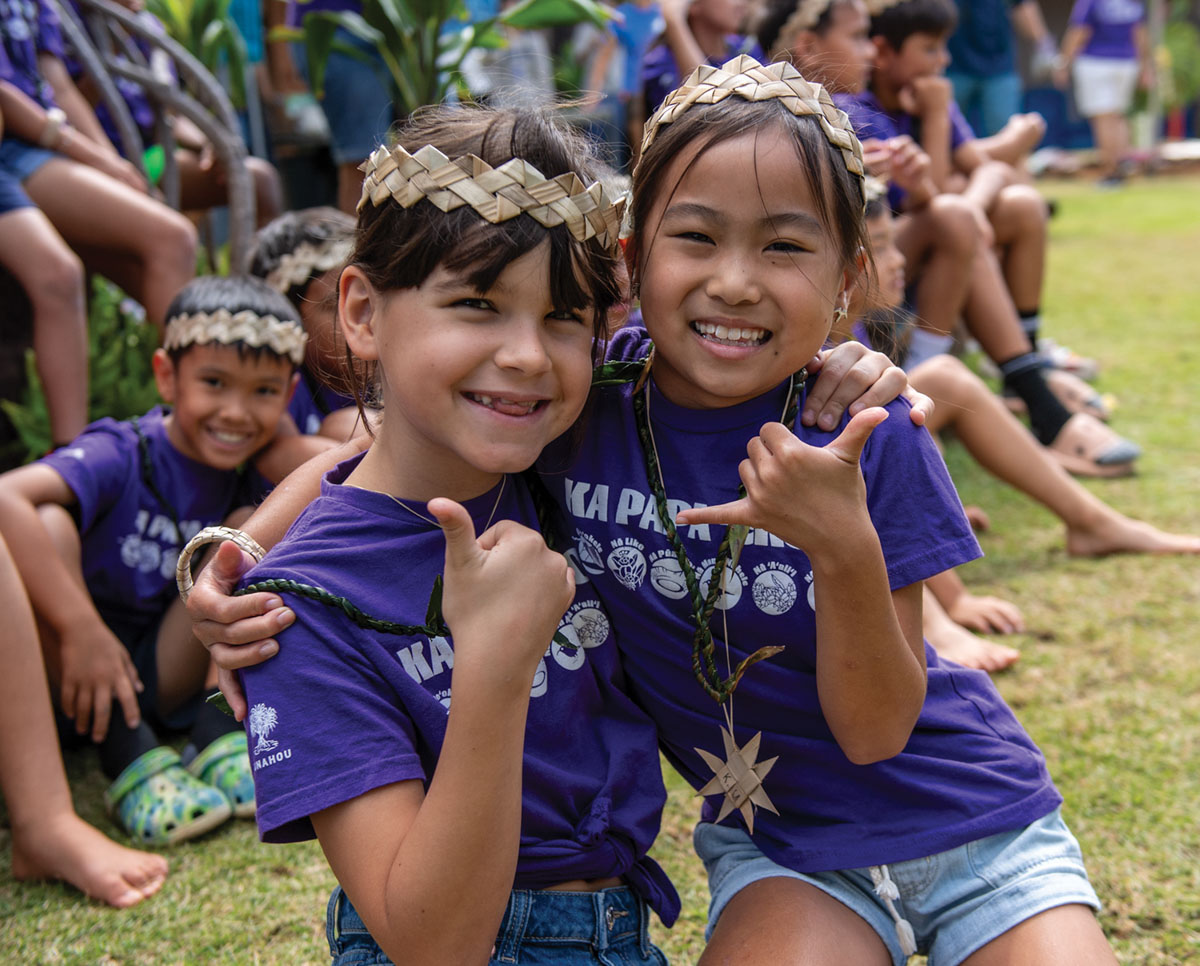
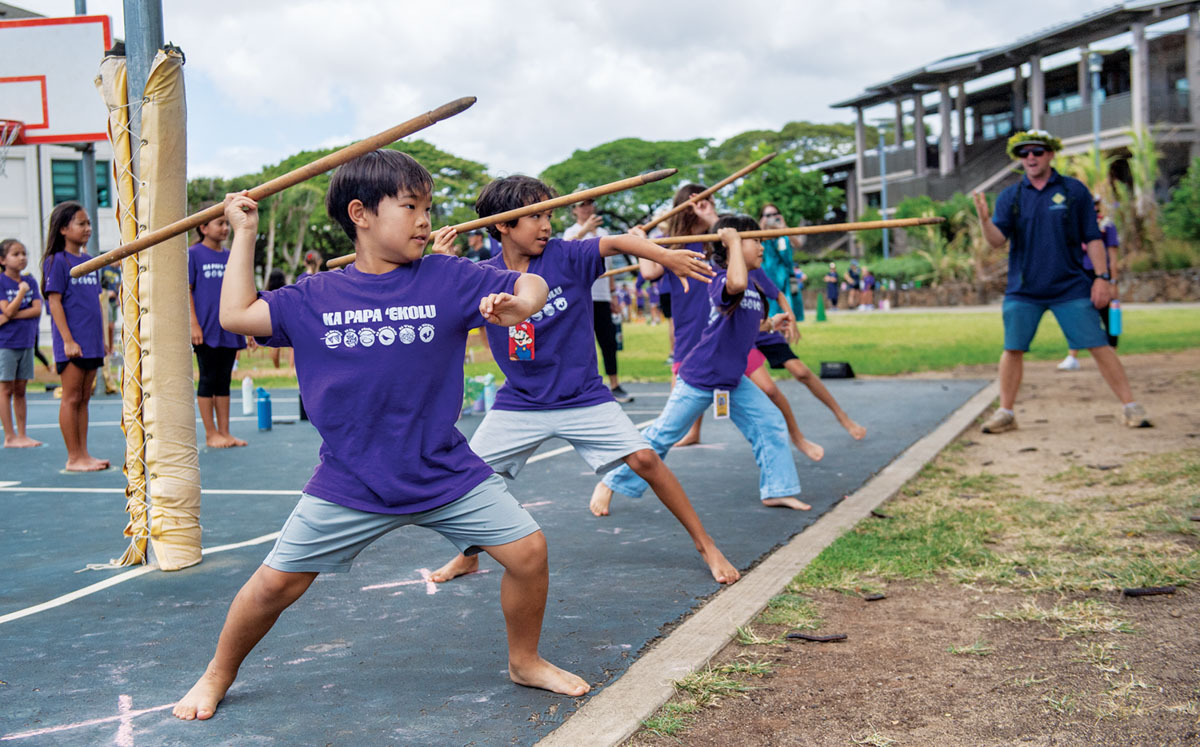
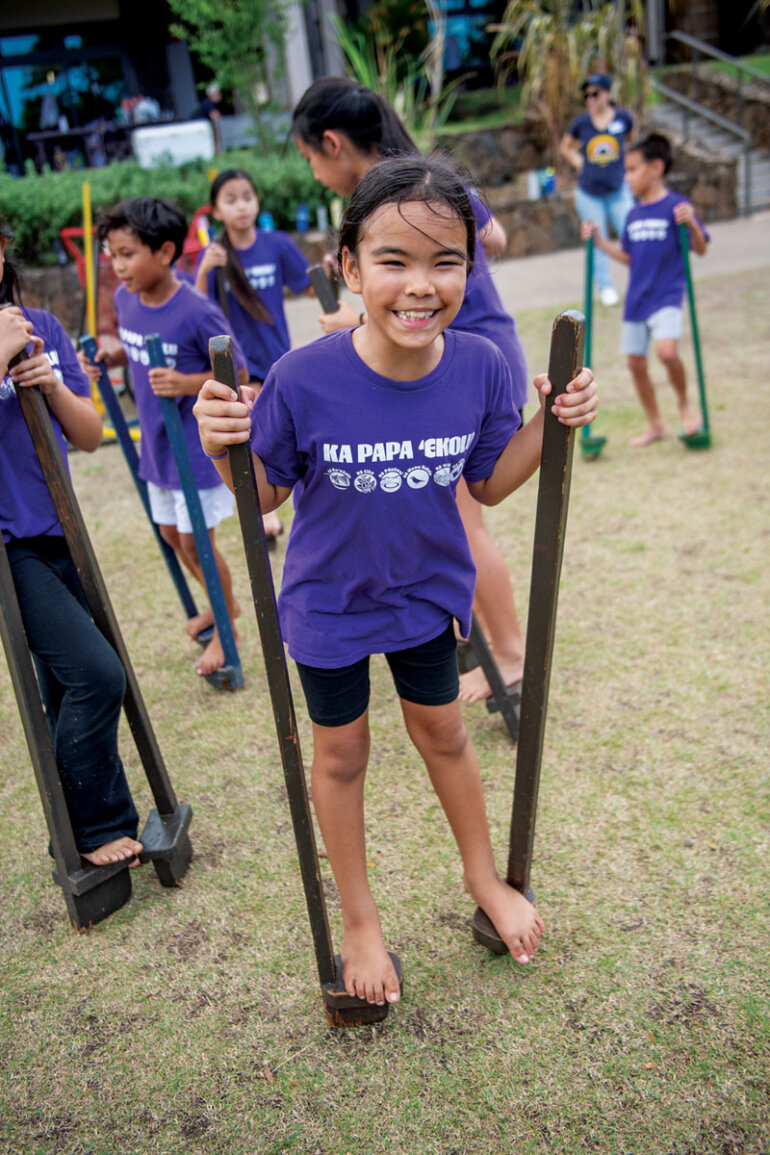
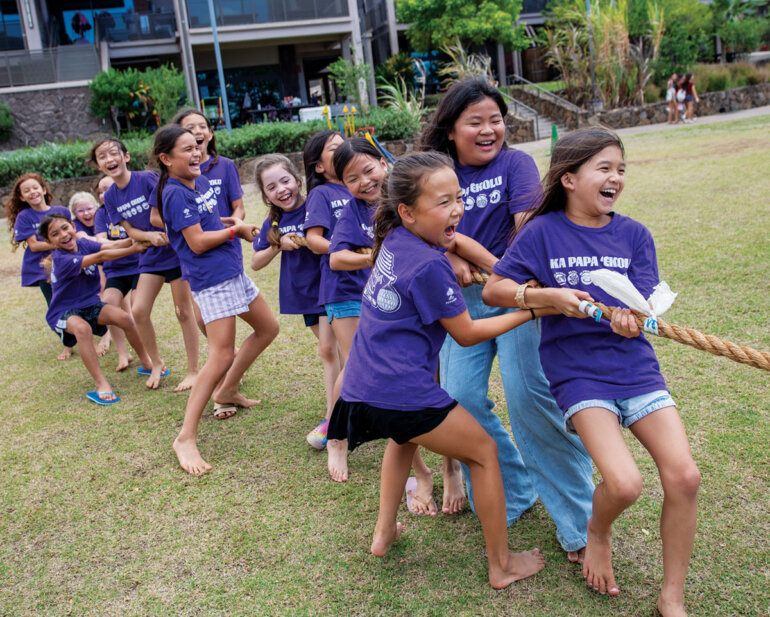
This May, students from the Class of 2035 gathered in the heart of the Sidney and Minnie Kosasa Community for Grades 2 – 5 to experience a hallmark Punahou tradition that will remain with them long after graduation: the Third Grade Lū‘au.
This beloved milestone does more than reinforce academic lessons learned throughout the year. It also grounds students in Hawaiian culture, fosters a sense of purposeful citizenship and inspires a commitment to sustainability.
Putting these values into action, organizers adopted new measures this year to help students think more deeply about the environment. “As a team of third grade educators, we decided to walk the walk ourselves,” said Grade 3 Kumu Cory Mau. “We introduced new sustainability practices to get us thinking about the current challenges that our larger state community is facing, such as the coconut rhinoceros beetle (CRB).”
Traditionally, the event relied on family donations to bring 150 – 200 coconuts to campus from across the island.
This year, however, the threat of the invasive beetle changed that practice. “We decided against requesting donations because of CRB. We just didn’t know where those coconuts would be coming from,” Mau said. “We didn’t want to inadvertently introduce something unsafe to our campus.”
Instead, the team sourced about 18 – 20 coconuts from vetted providers to teach cultural practices and the many uses of this fibrous drupe. “We were thinking about Lū‘au in a more sustainable way,” Mau said.
Similarly, organizers chose not to solicit flower donations from families this year, cutting down on waste and lowering the risk of introducing invasive red ants to campus. “Instead, we coordinated with Punahou Grounds to gather flowers right here,” Mau explained. “We used it as an opportunity to discuss proper harvesting practices with the students. They learned which plants are best for decorating for a gathering, which fostered a greater connection to their environment and taught them how to use campus resources responsibly.”


The hands-on work reinforced lessons about Native Hawaiian plants that students explored throughout the year. “We have the kids go out and observe the plants and draw sketches, and then we teach them about how they are useful to us,” Mau said. “It’s like examining coconuts and then weaving your plates, or looking at the hala tree and weaving your lei po‘o.”
In recent years, the sequencing of the Grade 3 curriculum has been adjusted so students study the kula, or the middle lands between the mountains and the ocean, around the time of the lū‘au.
“When we sat as a grade level with my colleagues, we thought this kind of mindful respect for the land was a strong concept for the students to take from this Lu-‘au experience,” Mau said. “It represents a higher sense of ownership and awareness that will benefit them for the long haul.”
