

By Suzanne Sato ’67
By the 1960s the Punahou Academy had more than doubled in size from 600 at the turn of the century to 1,500 students, and the venerable Cooke Library (now Cooke Hall) which opened in 1909 was bursting at the seams. In 1962 architect Ernest Hideo Hara (Class of 1928) took on the challenge of designing a new state-of-the-art library for the Punahou Academy. The expansive mid-century design of the new Cooke Library which opened in 1965 was larger than a football field and drew national attention. Facing the Academy and Alexander Hall with its back to Rice (Middle) Field, its striking curved design enclosed a college-style quad.
By contrast, the newly reoriented Mary Kawena Pukui Learning Commons is designed as a “welcoming gesture” to the rest of the campus, a bridge from the Academy to Ka Punahou, Pu‘uomānoa and the K – 8 community.
Transformed by architect Pip White ’66 in collaboration with Laura Ayers and WhiteSpace Architects. the Learning Commons is scheduled to open in fall 2026. It is designed “to create a place where students, faculty and the broader community could come together – sharing ideas, exchanging knowledge, building connections and telling stories.”
The vast and open main library space – without pillars or walls – has always been a key feature of the building, but peeling back the ceiling and celebrating the underlying steel trusses have modernized the design. Soft light now streams into the reading room with the addition of 11 clerestory windows which highlight the original mansard roof design.
Everywhere you look in and around the Mary Kawena Pukui Learning Commons, you will discover stories of Punahou and Hawai‘i, embodied in the walls and spaces of the building. Here are a few:
Telling Punahou’s Story
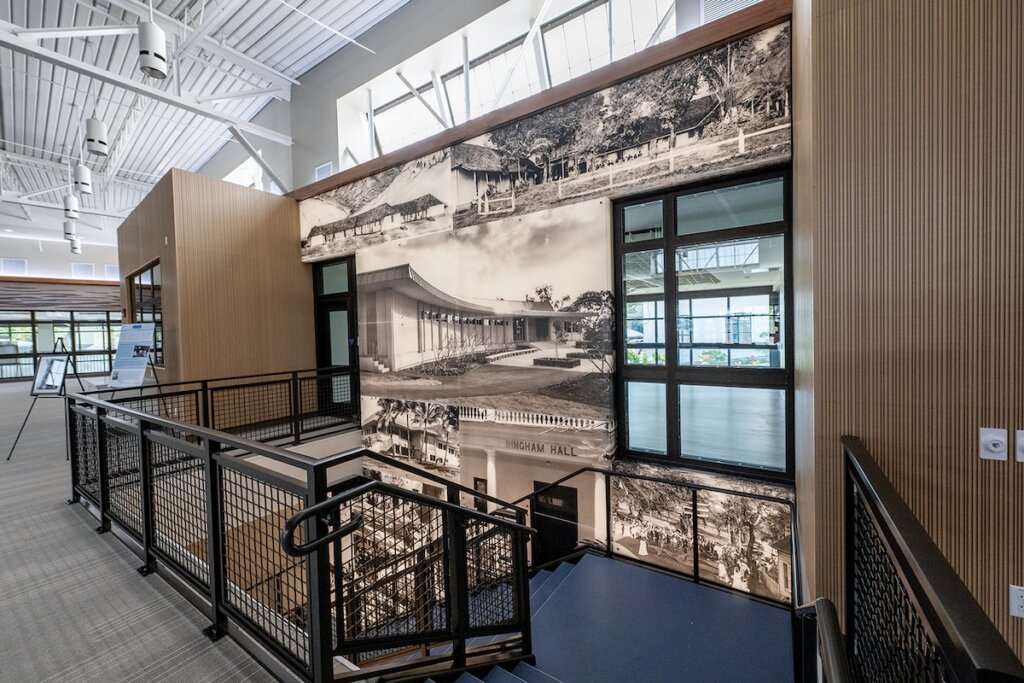
The two-story history wall at the center of the Cooke Library Collection depicts the buildings that have occupied this site since Punahou’s earliest days: the original E-building is represented in a drawing and an early photograph; the memorial stone marks the cottage of Hiram and Sybil Bingham; the first Bingham Hall built in 1883 housed student residential life; a view of the flagpole at the center of Rice Field; and a wall-to-wall view of the 1965 Cooke Library.


A bold blue graphic superimposed on the floor of the café and engineering design lab on the ground level outlines the location of the original E-building, comprised of Dole and Rice Halls, reflecting the convergence of Punahou’s first building with this newest hub of Punahou Academy life. The ‘ulu, kalo, ‘uala and hō‘i‘o garden in the courtyard outside the café doors recalls the vegetable and banana patch that was once cultivated adjacent to the E-building. Throughout the Mary Kawena Pukui Learning Commons are connections to Punahou’s past.
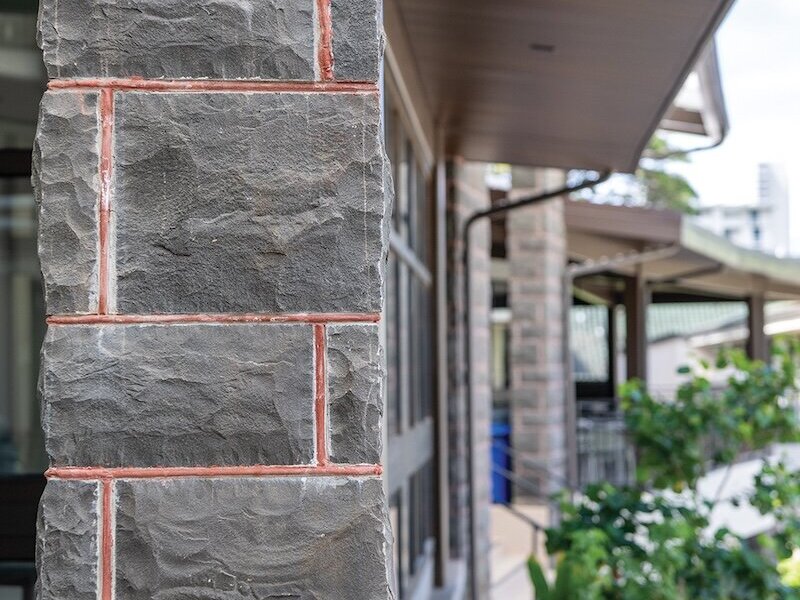
The stone veneer that accents the pillars and walls of the Learning Commons exterior tie the new construction to the historic design of Cooke and Pauahi Halls. Cooke Hall was the initial inspiration and WhiteSpace designers tried to match the color, size and texture of the original lava, including the historic terra cotta piping in the grout lines.
Mid-Century Vibes
Several preserved mid-century design features link the Mary Kawena Pukui Learning Commons to the former Cooke Library, which was described as “a modern, forward-looking building, with traditional roots … a living library … and matchless cultural center.”

The copper fascia around the perimeter of the roof is a decorative and practical element that added an elegant outline to the original design and highlights the mansard roofline.

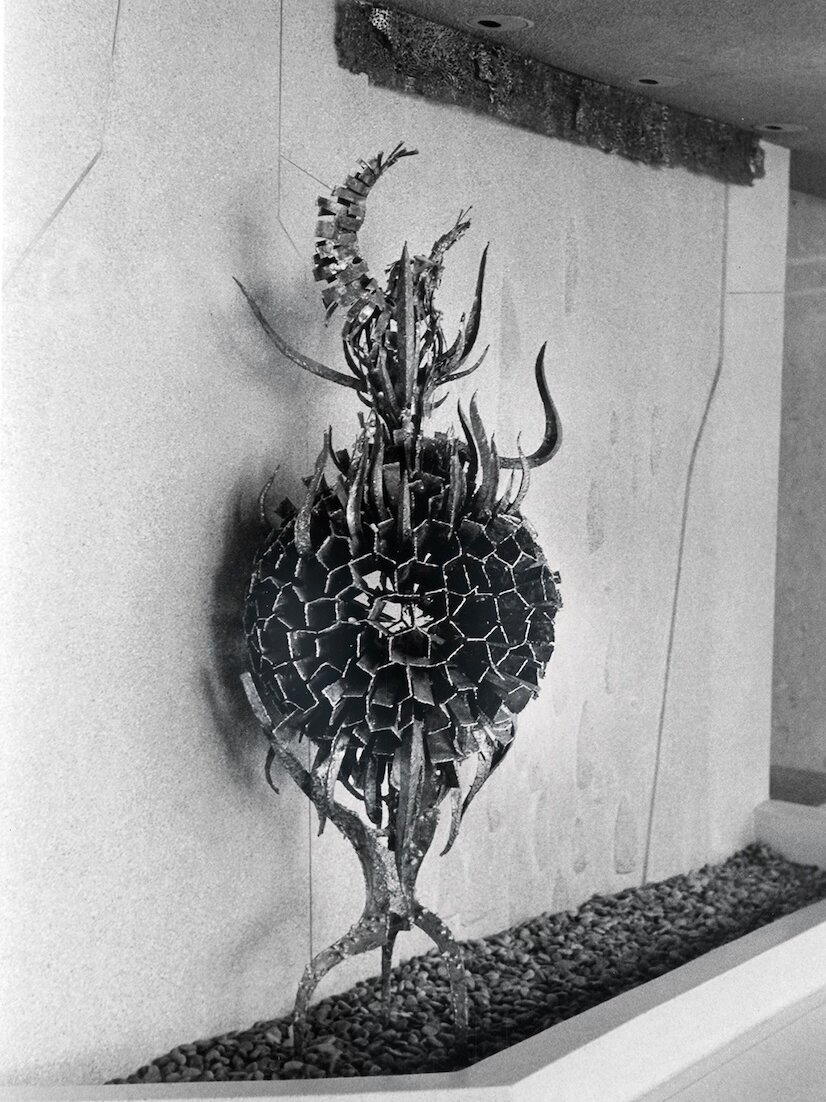
The terrazzo wall, evoking the pali of Hawai‘i and waters of Ka Punahou, that greeted students at the entrance to Cooke Library for 60 years, was carefully wrapped and protected during construction. Now unveiled and refreshed, it welcomes visitors to the reconstructed art gallery, and continues to provide a backdrop for the bronzed hala tree and majestic pueo by Edward M. Brownlee. For the past two years, the 7-foot sculpture has been housed in the jewelry balcony at the Castle Art Center, where art faculty Pete Hansen ’84 and Calvin Lac have been cleaning and polishing the sculpture prior to reinstallation.
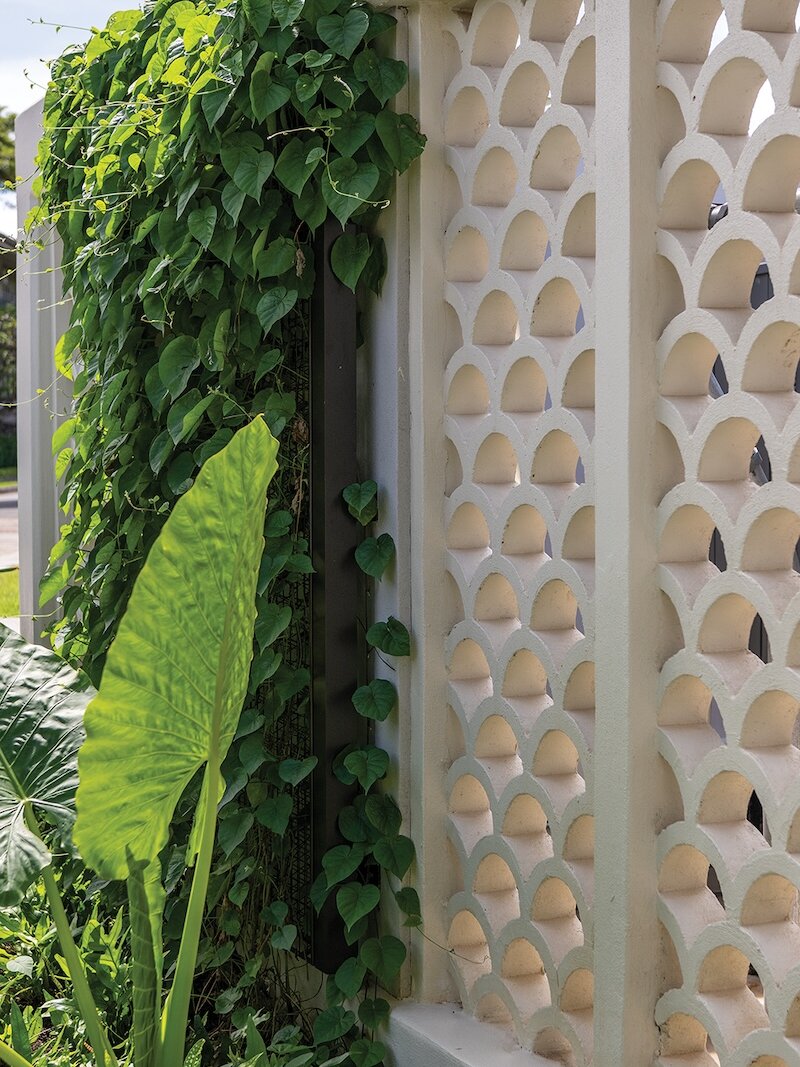
More prominent than in the original Cooke Library design, the breeze block screen on the Diamond Head side of the building reflects the mid-century architectural cast stone elements popularized by Claude Stiehl and C.W. Dickey, Ernest Hara’s first employers upon returning from USC. The graceful “fish scale” design may have been inspired by a 1949 book of Chinese lattice work found by his granddaughter in Hara’s research collection.
Mary Kawena Pukui Learning Commons project at learningcommons.punahou.edu